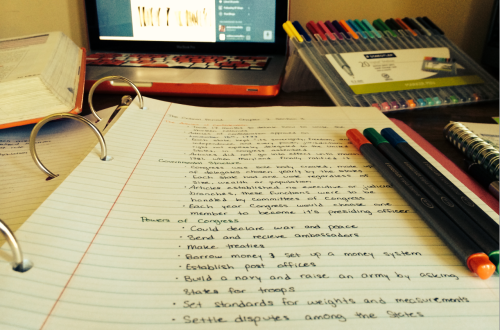
Over the years I have run numerous revision sessions to GCSE groups. I have run Easter revision sessions, after-school revision sessions, online Twitter revision hours and one to one revision intervention groups. I have taught students the benefits of revision and the process of how it happens through leading our Year 9 Learning to Learn course. I have led revision assemblies for all Year 10's and 11's. I have even worked with staff to develop effective revision techniques that tie in with key ideas on how the brain works and stores information. I would be confident in saying that I believe I can run an effective revision programme that benefits students. However, this year I have really looked at my practice and refined (and pruned) the way that I approach teaching in general. This has allowed me to focus on what is essential in great teaching and revision is no different. As I approached the critical 'exam prep' season, I was very concious that I wanted to do away with all of the gimmicky 'activities' that probably take twice as much time to set up but have half the impact than other simpler ideas. I wanted to ensure that what I did had the key elements of effective learning. Any revision session I chose to construct had to allow me the opportunity to question students, check their understanding, provide feedback and feedforward, allow them a chance to act upon any comments, make improvements to their work, practice exam technique, allow the opportunity to model good exam structure, work collaboratively whilst revising with others and force students to make an action plan of areas in their knowledge that needed addressing.
Focusing on these key elements led me to reading a number of interesting posts. Each post highlighted a different key aspect which when combined, would allow me to create a structure to my revision session that I believed would help students. The first of these posts came from Alex Quigly (see here) and focused on 'testing for learning' and using tests in revision which ultimately have a positive impact on learning. The use of tests or exam drills must be teamed up with repetition and skilled feedback for students. As Alex says, 'the act of retrieving information for a test is proven to recall more than simply restudying information'. Using exam questions with students can be tedious, but is bread and butter in terms of preparing them for the real thing.
The second post I read was also from Alex and talked about the evidence behind revision techniques and helped me select the approach that I was going to use with my class. The post which is an excellent read can be found here and is well worth taking a look at. It really helped me filter out activities that had little or no impact and allowed me to focus my attention on using what works. The next post wasn't based at all on revision but instead on effective use of feedback and how to 'close the gap'. It is written by Tom Sherringtonhere and summarises his visit to Saffron Walden Community High School and the approach to feedback policies that they use. The article got my mind thinking about how effectively I provide students with feedback and how I could implement it (especially the marking key) into my revision sessions. The next post was from Annie Murphy Paul and can be found here. In her article she summarises the perils of re-reading work as a revision strategy, using the work of Daniel T. Willingham as the basis of her post. It is a very thought provoking piece of writing and one which reaffirmed my own beliefs on the subject. The penultimate post was a one that I had used last year and inspired my to design a SOLO stations lesson. It is written by @DVPLearning and explains an observed revision lesson where the teacher used a method called 'Teach, Do, Review'. The full article can be found here but explains how the teacher split the class into three groups based on their competency in that particular topic, and then gave each group a different revision activity. The method he talked about resonated with me and allowed me to provide a differentiated revision lesson that allowed students to move between tasks in order to progress or recap a topic. The last post was tweeted out by Darren Mead and talked about a PEEL task called a 'Five out of three' activity. A link to it can be found here. The activity encompassed so much of the core lesson essentials (questioning, feedback, time to act upon feedback, checking content knowledge....) and was one I would definitely use in my revision programme. So, with all of these combined ideas, I created a 'Teach, Do, Review' lesson. The session is designed to draw upon the key points from the blogs above and ensure that the revision that takes place is both productive and meaningful. Teach, Do, Review (with a five out of three starting point). It is probably important to point out at the start that this lesson was a 2 hour double theory lesson. This allowed me to run the full process. The starting point of the process involved me ascertaining the level of subject knowledge that student already had for my chosen topic area. It is important to find out what students already know and what areas still need refining. Wasting time covering a topic that students are already competent in is time not spent covering a topic that they are not. With time a very precious thing in the exam prep period, it is important I use it efficiently. Using Alex's advice in his post on using tests to retrieve information, I decided to use the 'Five out of three' PEEL task as the basis for this.
As students arrived I grouped them into paired teams based on their previous assessment levels. Similar ability students based on data would therefore work together and allow me the chance to tailor my feedback to their needs. The process of the session would be extremely simple. Students would receive six exam questions taken from the unit topic we were covering (physiology in this case). Students were able to choose any question to tackle first, therefore allowing them to prioritise them and create their own order. Students worked with their partner to answer the questions one at a time. They would not be able to use any resources (text books, note books...) at all. Everything had to be as a result from memory retrieval. When they had answered a question, they would hand it in for marking/feedback.
Each question varied in marks (from 1 mark all the way to 4 marks). They are low enough for the lesson to keep pace, selected carefully enough for me to check understanding (hinge questions if you may), varied enough to cover all aspects of the content and brief enough to allow me to mark them quickly. As the questions are marked, they receive a specific score out of three, irrespective of how many marks were on offer. The scores were as follow:
1/3 = Answer was poorly answered
2/3 = Answer is fine but lacks detail, terminology, definitions, examples...
3/3 = Answer is as expected in the exam mark scheme. It would receive full marks in the actual exam
4/3 = The answer is above and beyond what is expected.
5/3 = The best answer in the class for that particular question
The use of the 4 and 5 out of 3 elements allows my more able students to stretch and demonstrate their content knowledge. As I allocated a score, I also added an annotation taken from my marking/feedback key inspired by Tom Sherrington's 'Close the gap' post. This would allow students who received low scores to know what needed improving, without giving away the answer (it forces them to reflect, think harder, question each other....).
Students scores were then placed on a score table on the board which provided an element of safe competition. This aspect worked extremely effectively with my students. It also gave them feedback based on the outcome/their scores (knowledge of results). Students could then decide, if their score was low, to come and collect their marked answer and improve it using the marking key feedback (knowledge of performance). They could then resubmit it for marking again and hopefully improve their score.
This process lasted approximately 45 minutes of the first lesson. The nature of the task, and the instant marking, allowed me to quickly identify weak areas of content with students that I would therefore need to address in the future. Through the marking/feedback key and scoring, it also helped students improve their subject knowledge. The depth of questioning between partners was excellent as they tried to remember the answers. It only took one key word or memory trigger for the answer to come flooding back. I then addressed a few exam question weak points and modelled on the board, how to structure this type of short answer question in the future. The process of modelling the answer with the students helps develop and form good exam technique and habits.
I then asked students to categories themselves, based on their confidence in answering those questions, into three groups. The students who felt that they had clear gaps in their knowledge of this topic area would work with me in the 'Teach' group. I would spend time with them going over the key content and explaining it again. I would be there to answer any questions and provide examples to help improve their understanding. Based on the assessment from the 'Five out of three' task, I could cover any obvious weak areas. At any point, if a students felt that they had covered the areas they were most concerned about, they could leave the 'Teach' group and move on.
The second group was the 'Do' group. This group felt confident in the topic area but would benefit from covering a few areas again independently. Their tasks were based on Alex Quigley's post and included the use of concept maps, along with gathering key definitions and terminology they were missing. The importance of making links within a topic were also important and students were encouraged to find connections/relationships with the information.
The last group was the 'Review' group. This group would review their content knowledge by answering exam questions (based on the post here) in an effort to demonstrate their understanding and thinking. They would have to leave an equal gap under their answers to allow them to redraft if needed. Once they had finished the questions they had them critiqued by a peer (already established in my class as explained here) and annotated using our marking/feedback key. Students would then act on this feedback instantly and 'close the gap'. The redrafted answers would then be critiqued again until their content knowledge was secure and demonstrated in their answer.
The process has been an enormous success and has been used in our departments Year 11 exam preparation. The combination of the various posts detailed above, as well as listening to warnings on what not to do, have allowed us to combine and create a revision procedure that has made the process of revision effective and beneficial.
A while ago I wrote a postreflecting on how I probably don't structure sequences in my practice to allow students the opportunity to properly act upon feedback. I then put a plan into action and wrote a post about how I would therefore create dedicated times in my lessons for students to do something with the comments that I or their peers had given them. As a PE teacher I'm not the best at remembering to do these sorts of things so I came up with a few ideas to ensure I did. The one idea that shone through was using a process called 'Critique'. This method of getting work analysed and unpicked sounds very similar to traditional peer or self assessment. And there are similarities. What critique does differently though is develop the process by getting the feedback and feedforward more specific and refined. It forces the feedback that is given to be more focused on specific features or elements. All of the comments are designed to allow the writer/author/artist to take away that particular draft and know exactly what elements need focusing on. The feedback becomes similar to that of a set of instructions, all with the purpose of driving forward the quality of a piece of work.
Critique also goes beyond an end of lesson activity and with simple protocols, makes the giving and receiving of feedback the culture of the classroom. It pushes you to deliver a dedicated lesson which involves only the process of critiquing work, rather than "Right, swap books with your partner and give them two stars and a wish. You have 5 minutes to do this". It requires the teacher to model the method of critique using actual student drafts or exemplars, and can be done in a number of ways including an 'In depth class critique' or 'Gallery critique'. The end result of doing this process over time is students critique each others work naturally and seek feedback independently of teacher instruction. Here is where the culture is developed.
So why do I love the idea of critique? Well, based on the various sources of research, evidence, blog posts, discussions of Twitter and so on, feedback is a big deal. In my eyes, quality written/verbal feedback ranks higher than the giving of grades and levels although it is often the other way around with students. Effective feedback that specifically highlights exactly what is good about a piece of work (so can be repeated and become habitual) and what exactly needs to be improved (to drive this piece of work towards excellence) is such an important component of the learning process (much more so than knowing a grade or level). But so often in my own practice, there have been times when the feedback I have written is never followed up. There are also still those fixed mindset students who are grade focused (as excellently explained hereby @joe__kirby) . This is where the process of critique is different.
As a number of teachers are increasingly engaging students to peer or self assess pieces of work, we need to first teach them how to do this. The research from G. Nuthall talks roughly about how 80% of feedback students receive is from their peers. But 80% of this student-student feedback is wrong ties into this. The rules, protocols, modelling, dedicated time and culture surrounding critique is therefore a great method for avoiding this low return rate. So what is it that makes critique different? Well, if you haven't already, I would highly recommend that you buy and read Ron Berger's 'An Ethic of Excellence'. In this book, Berger exemplifies the process and breaks down the structure for forming effective critique sessions. He is driven towards getting students to value their work and create pieces of excellence. The mantra of 'If it's not perfect it isn't finished' echoes some of his values. There are a number of additional factors (such as publicly displaying work, having an authentic element to the work and so on that add to this) but the core foundation of critique is key to producing excellent work and ensures that feedback is given and acted upon. And as I said before, make critique part of your classroom culture rather than an activity or task.
So how do you do this? There are a number of methods but the core principles stay the same. I would recommend reading Berger's book or read this guide from the Innovation Unit. The following tips are how I adapted and implemented the critique process during my PBL project.
Before you even start the critique process, it's important to establish the following steps:
1 - Examples of excellence: Introduce a piece of exemplary work similar to what students will need to complete (an example of excellence). Critique it with the class. Draw out what it is that makes this piece such a high standard including key terminology. Create a success criteria for the piece of work which students use to complete it. You will use this in your first critique session.
2 - Drafts: Call the work students create 'drafts'. This may seem irrelevant but it actually gets students into the mindset that the work they are completing will be critiqued and it will be redrafted. By calling it a draft it explains that work is not finished and that improvements can always be made until you do get to a finished product (providing your success criteria is strong enough).
Then
Infographic by @saidthemac
1 - Give critique time! Usually a whole lesson should be set aside for a critique session. Time is needed to model the process, allow for detailed analysis, the giving of feedback and acting upon it. Don't rush it! What about the time element though? If I have only 6 weeks to cover the content of a unit/module/scheme, I don't have time to review work. Well actually, critique improves the quality of the work and reinforces the content if you ask students to focus on this. By actively seeking out errors in content, it develops the level of their understanding. Once again, set aside time! It really will benefit the process.
2 - Establish the rules: Berger uses three very simple rules when using critique. These rules ensure that the quality of the feedback is improved. They are:
Be kind: All comments should focus entirely on the work. No personal comments at all. No sarcasm or put downs. The comments can be challenging but the creator of the work should feel that the feedback is work orientated and happy to receive it. Hard on content, soft on people.
Be specific: Refined and precise dialogue with detailed explanations on positives and steps to improve. Comments should explain exactly what needs to be worked on (like a set of instructions) which the writer can simply take away and use.
Be helpful: If the comments don't benefit the work, the learning, the learners or the class, don't share it. Everything you provide feedback on is there to help make the work better.
3 - Model the process: Using a piece of work or exemplar, model the process of critique to your students. Show them exactly the how to critique work. This is normally done by the teacher and in the form of an 'In depth critique' to the whole class. Share terminology that you are using. Refer to the success criteria from when you first set the work. Demonstrate exactly how you are focusing on key details. Scaffold what good feedback/feedforward comments actually are. Get students involved in this and see if you can refine the comments further.
4 - Banned words: Promote the use of specific terminology that you drew out of the initial exemplar piece of work. Promote the use of these words and the success criteria whilst critiquing the work. We are trying to develop students vocabulary and make the feedback they give specific and helpful. Also encourage any topic specific terminology. For instance, if you are creating a piece of music, use actual words that the industry and composers use. Create a list of banned words. Get rid of 'It's good' and 'I like it'. They are not specific and definitely not helpful.
5 - Allow students to critique: Using what you have just modelled, allow students to critique each others work. Use the success criteria to structure what it is students focus on. Focus on one element at a time. This may be asking students to look at the opening paragraph in an article they have written and see if it answers the Kipling's questions (who, where, what, when, how, why - basic guidance from local journalists that all articles should start with). You may simply ask students to critique the spelling, punctuation and grammar. Maybe ask them to focus on the shape of the wings (as shown in Berger's video above). The important thing is to make the elements you want critiqued to be clear. Ask students to critique too much and the specific nature of their feedback/feedforward gets confused. Critique sessions can also take on two forms:
Formal in depth critique: This is similar to the process that you have just modelled. Students look at each other work and focus on an element at a time. They identify good points that match the success criteria, and pick out specific parts that need improving (or if tweaked, could make the work better). A copy of the critique sheet I use (which is differentiated) can be found here.
In depth critique - from my Year 11 GCSE lesson
Gallery critique: This is where work is displayed in a gallery style (on a wall, laid out on tables, on presentation boards). Ask students to individually walk around and look at one or two pieces of work. Ask them to focus on one specific element. Students write feedback on a post it note or feedback slip and place it below the work. Snowball this and ask them to discuss their comments with a peer. Move on and repeat the process on another piece of work, either with the same or different focus.
Gallery Critique: Picture courtesy of Jamie Portman.
6 - Critique the critique: Particularly in the early days of introducing critique, get students to review the comments that have been given to them. Are they refined enough? Are they specific enough? Do they pinpoint exactly what needs improving? If anything is unclear, model how to develop it with the class. Use examples of good and bad critique comments with the class. This is taking peer assessment to the next level so knowing how to give effective critique comments needs support.
For the more able students in your class, get them to use questions in the feedback they give to the recipient. Comments such as 'Could you eliminate the number of redundant words in your final paragraph to conclude your argument....' make those individuals who are able to, really think about amending their work.
6 - Redraft: This is the vital element! Dedicate actual time, in that session, for students to begin redrafting their work. They need the guidance, the support, the ability to question those who gave them the feedback, the teachers careful eye.....all to help structure the redraft process. Don't simply let this be done for homework. It can be but initiate the redrafting section in your class. Students need to get into the mindset that work needs reworking if it is to become something of beauty. As Berger states, you wouldn't put on a school production without practising it over and over again, making improvements after improvements, until it was perfect. Unfortunately some students will not initially see the benefit of redrafting. To combat this, get students to keep every copy of their drafts. Get them to number them and point out the improvements and developments they have made as the go through their multiple drafts. This is where keeping portfolio's for students makes sense.
7 - Culture: It takes time but creating a culture with your students is so important. We need to make students value feedback. We need to get students to want to seek it out. We need to make students want to make the work they are producing better and better. We need to help them develop their content knowledge and actually look at the feedback given to them. We need to help them actively read the feedback they are given and make the improvements identified. We need them to see the benefit of this effort and hard work improves work vastly (providing the feedback is good). It does take time, and there will be some reluctant students, but creating beautiful work and developing content knowledge is important. And it is from structured feedback, not necessarily grades, that ensures this happens. Incorporate this regularly into your practice and maybe the quality of feedback in your classroom will increase.
Resources
The following links may help you develop your understanding further about the process of critique. They may also help you understand the difference between critique and traditional peer assessment. Please look through them and see the benefits that dedicated critique time can have. The first presentation are quotes from teachers using critique. The video is from a session where I delivered a critique introduction to all staff. The final presentation is what I referred to during that presentation.
During my recent Cycling project (my first attempt at PBL), I really tried to consciously drive literacy through everything I did. I've recently seen the benefit of stepping away from my reliance of text books and using alternative resources instead. I've also tried to include extended writing tasks wherever I can and make the move away from short ended and sometimes meaningless 'activities'. I have to be honest and say that using a wider range of sources and getting my students to challenge themselves with a piece of writing has truly seen the benefits. Examples and answers in lessons have become contextualised and more authentic, and the level of their answers for long answer exam questions (essay style) has come on leaps and bounds.
One of the simplest things I did when working on that project was carefully select a number of articles and texts for students to read. The idea behind these sources was to allow my students to learn the content I was covering, but at the same time use something more current and relevant than excerpts from our standard text book. I spent hours tracking down articles and news reports from various news media websites. I delved into the deeper world of cycling and found reports and texts on various technological developments or political debates within the sport. Now some of these texts went into far more depth than needed, but what they did with a Year 11 GCSE class, was give them authentic examples and stories to support their knowledge. The fact that many of them used what they had read in their own work and in discussions was amazing to see.
But then I had a conversation with a colleague that made me think. At our recent INSET day we had the second part of our Literacy seminars. I signed up for 'Accessing and engaging with texts' with our amazing English teachers Sarah Paige and Polly Williams. The first question they asked us was along the lines of 'Before you even analyse a piece of text, or even get students to answer questions on it, what is it that you do to get your students to engage with it?'. I was stumped and the only thing that came to mind was a conversation with one of my students who (when we looked at these text during the project) said that he hated reading. As he was the only one that actually said this I worked with him one to one but never considered the way I had introduced the text to him. Did I have a strategy up my sleeve to help him read it? Did I sell the text to him to make him motivated to read it? The answer is probably no and mainly because as a PE teacher these questions had never crossed my mind. I took the word of the majority of my students (who happily got on and read) and forgot those who may need extra support. In fact, the only strategy I could think of at the time was to 'silently read it' as a way to engage with the text.
The seminar really inspired me and as a group we came up with a number of ideas to first and foremost get students to read texts in your class. What is about to follow is a list of ideas that was created on the day and some additional ideas from my project. I will apologise now. I am sure some of these ideas will have a few teachers shouting at their screen, considering whether they are gimmicks or devalue the process of reading. I am sure some of them are but the aim is to share ideas. What they are though are ideas to get students to initially engage with a text (before setting analysis or comprehension tasks) and get them reading it.
Finding interesting texts: So obvious. Now I know some people will say that unfortunately, sometimes students just have to get on and read something even if it isn't interesting. I agree. Some of the most insightful and educationally beneficial text can sometimes be a bit tedious. But as a hook to the project I tried very hard to find a number of very interesting texts to use with my students. I looked for articles that talked about the most fantastic technological developments, insights into the workings of a cycling team, scandals regarding sponsorship and role models in the sport..... In fact I tried to find as many different perspectives about the topics I would be covering in order to enthuse students about the topics and then engage with the content that was within them. Maybe to initiate the reading process, some lead in articles with high interest levels could be the way forward. The 'heavy' stuff can come later.
Differentiating texts: This is something I was doing clumsily and will do more consciously in the future. I now realise that my class is full of different reading abilities as well as comprehension levels. It would therefore be beneficial to seek out similar articles for your students that vary in language use, vocabulary and depth of content. Allow students to choose the article of their choice and move up or down difficult reading as they require. Another way is to simply assign different levels of texts with the different sets of students in your class. Those that need extending can work on the detailed and technical text, whereas those that need support can use a similar text which is pitched at a lower reading level. If using the Internet, Google advanced search has a 'reading level filter' which can help distinguish the difficulty of texts.
Google reading level filter: Google has for some time had a 'reading level/age' tool. Simply use the search bar to find sources of a particular topic. Then using the search tools drop down menu, click on 'all results' and then 'reading level'. This will then allow you to select advanced, intermediate and basic texts on the subject you were searching. Teach students how to use this and they can differentiate the texts for themselves. A link to Google's support centre explaining this tool can be found here.
Varying texts: When searching for my cycling project articles I tried very hard to find a variety of different writing styles to share with my students. I found some very technical articles, some that came from tabloid press, some that came from cycling enthusiast blogs, some from cycling teams own webpages (Team Sky). The idea for this was to allow students to experience reading a variety of different styles, but also obtain similar information from a type of writing that they preferred. In the background this type of selection allowed students to experience different viewpoints and perspectives but that's another post! By finding a medium that engaged them and allowed them to access the information, students could happily read the text given to them. Had I given everyone the same text, some students may not have been captivated by it and the opportunity might have been wasted.
Finding their own texts (which they want to read): Teaching your students how to find texts and articles is a great thing. After I used my 'lead in' articles, students could see the standard of writing that I was looking for. I then explained what content needed to be found and students went off a searched for a similar standard of text. By bringing articles back to the class, we had a new bank of resources, selected by students, meeting the criteria I required and would ultimately appeal to other students in the class. This ownership of a text engaged them with reading and fulfilled the purpose. It also led to new reading when peers recommended an article.
Silent reading: Obvious as it is, sometimes asking the class to silently read a text is a simple process. By asking individuals to read in silence, distractions are minimised and the students attention should be fully focused on what is in front of them. It also comes with some obvious pitfalls when students with low attention and inability to manage distractions means that the task becomes pointless for a few. It is also worth considering how you would cater for those who struggle with reading without bringing attention to them from the whole class.
Paired reading: Reading a text in pairs can help break up the challenge of reading from some. It offers a chance for an individual to be supported by a peer. It also allows the opportunity for a student to break up a challenging text into sub sections with a partner. Taking it in turns also allows good reading to be modelled providing the process is taken seriously. It also actively engages with the words as they are verbally spoken (and not skimmed or glazed over which is normally followed by re-reading what has already been covered). Obviously the pairing up process and expectations of this task must be well structured otherwise distractions can occur and the reading element is lost.
Whole class reading: Organised by the teacher, students are delegated elements of a text to be read. The students take it in turns to read their section and then the next follows on. The whole class listen to the reading and take their turn when ready. This process usually requires those not reading out aloud to follow the text and therefore engages them as well. There does come a problem with reluctant readers, those who struggle, those who lack confidence with public speaking and those fixed learners in your class. These individuals may not welcome the pressure of whole class reading so involving these may need to have a safe and supportive environment set up.
Reading an excerpt (teacher): A text may be introduced by the class teacher. Carefully choosing an excerpt and using this as the 'hook' with your class may compel them to read the rest of the text in front of them. Choose your excerpt carefully and leave the text on a cliffhanger if possible. By doing this you have modelled good reading and given the students a taste of the book which should hopefully motivate them to carry on.
Dram it up!: As students enter the room, create an atmosphere. If the text you want students to read has a dark undertone or element of horror, dim the lights, have some atmospheric music playing, take on a character and really 'dram it up'. Read the first excerpt of the text and hopefully this will enthuse students to engage with the text and read the rest for themselves. By creating a sense of excitement towards reading, the engagement should increase. As a pitfall, it does take the right group and confidence to do this. It could also detract from the process of reading if done poorly.
React to the text: Have the text read out by individuals or yourself. The remainder of the class will follow the text from their books. Set up a structure where students interact with the text as it is being read out. The interaction could be for a particular character, a theme that occurs, an opinion that comes up frequently, taking sides with characters or whatever your text requires. You could also have students interact when the writer uses a particular style of writing or grammar. At these times, students can boo, cheer, keep a tally, heckle and so on. By getting them involved in the text, they will need to be actively engaged in it and read it as it goes.
Characters assignment: Obvious but a classic. In small groups or in a whole class set up, students take on the role of a character or narrator. Students will all need to follow the text and read it in order to know when their section is coming up. By actively reading out aloud, students are again engaging with the text. The difficult process of reading is supported by the ability to hear the words (from your peers doing their sections) as you read them for yourself.
"Pass to": Have students read in pairs or small groups. Each student has a "pass to" choice which they use only if they are really struggling (can't be used for laziness). Students have to read a section or specified amount out aloud. If they find it incredibly difficult they can use a "pass to" where they literally pass the responsibility of reading that section to another peer. This will allow that reader to be supported. Because that student used a "pass to" they will have to finish their reading allocation elsewhere in the text. Be vigilant and stop lazy readers (who are more than capable) of using the "pass to" as a get out option.
Hackasaurus: Introduced to me by @JOHNSAYERS and @janeyb222. A great web tool. Simply go to the website and install the Hackasaurus 'X-Ray Goggles' into your bookmarks bar. You are then able to go to any website and edit what is on there. Don't worry, you aren't actually editing the real web page. All you are doing is changing what you see in your browser. So why would you do this? Well there are a number of reasons. You may wish to edit a particularly difficult article or text found on the web into something more accessible to your students. You can simply read the article yourself and change some of wording or terminology into something simpler. The article still has its authentic element. Just make sure you don't lose the core of the article. You may also wish to create a 'spoof' piece of text but using an authentic website such a the BBC. This allows you to get your content across but with the trick of it looking authentic. This could be an effective way to engage a normally uninteresting piece of text. It really is a versatile tool.
If there are any other ideas that people are using in their lessons, simply for the purpose of starting the process of reading texts (without having to look for key points or answering comprehension questions or so on - this is the next post) then please let me know.
Now this is a post that has been brewing since the London Olympics but has taken some time to compose. To set the scene and give a bit of background to this post, imagine back to the brilliant summer that we have just had in 2012. We were privileged to be a nation that watched one of the greatest spectacles that I have had the pleasure to see. We were immersed with stories of determination, commitment, motivation, bravery, hard work, fair play.... and blessed to see role models and stories that inspired and moved us. The London Olympics was filled with euphoric moments and had the whole nation caught up in its brilliance and moments of magic.
But after watching the Olympics, something changed within me in regards to the way I view sport. As a PE teacher I now cringe at the number of Football examples and stories that I use with my students, particularly in my theory lessons. I now think were these the best examples to share with students? Did they provide enough variety? Did they best explain the topics I taught. Are they even the best role models to warrant recognition in students exam answers? There was one part of the Olympics that caught my attention in particular: Track cycling. Now I remember back to Beijing and the success that we had, but London 2012 took this to a whole new level. I was in awe of the professionalism of the athletes. I loved the stories that they brought. I was engrossed in the technological elements of the sport and the minute detail they focused on in order to gain a marginal advantage over rivals. Watching this, I thought "Could I use cycling with my students and use it as a rich example that covers many of the topics we cover?". And with that, a plan began to hatch.
So, as any normal teachers does whilst relaxing in their summer holidays, I thought about school. I knew in the back of my head that the topics coming up in my GCSE PE theory class where ICT in sport, Science and technology in sport, sponsorship, role models and media. Everything that I had seen through the track cycling had effortlessly provided me with examples that I could use in my lessons. But this wasn't enough. I didn't simply want to replace my Football examples with Cycling ones. Instead I wanted to go bigger.
It was at this time that I had also re-read Ron Berger's mind blowing book called 'An Ethic of Excellence' (recommended to me by the excellent Martin Said). The book is a must read if you haven't already and explains his vision to make learning more whole and strive for a culture of excellence in the work students produce. He uses well structured projects that bring in the real world/community to develop secure understanding of content knowledge. He refers to this as Project Based Learning (or PBL for short). I could really see myself putting together an eye opening project which covered all of the content I needed to, gave rich examples for students to put in their exams and was both inspiring and challenging. But with anything new, I also had the worrying doubts as any reflective practitioner does such as:
What if it goes wrong?
Why try something so radical with students when they're in Year 11 and have exams at the end of the year?
What do I know about cycling and should I just stick to normal 'content lessons'?
Will they gain secure content knowledge in all of the topics or will the project hinder this?
What happens if what I create isn't PBL and doesn't work?
Will what I do have a negative influence on my departments/colleagues plans?
With these in mind I used my Twitter 'mentors' in the form of @DKMead, @Totallywired77 and @saidthemac. I bombarded them with these cautious questions and was overwhelmed by the support and guidance that they gave. They helped with many aspects of my planning and posed further questions for me to think about in an effort to create something that was not only driven by content, but also incorporated as many of the elements of a good project as suggested. It is this collaborative culture that Twitter has created which is so helpful when trying something so daring.
Finally, I have also been a firm user of SOLO in lessons and as a non classroom specialist, this has been an excellent way for me to structure lessons and develop learning. I had been thinking in an earlier postthat I could use SOLO as part of a bigger scheme of work where each topic in itself would be a multi-structural element of a big picture. I therefore decided to incorporate SOLO within the project in order to measure and look forward for opportunities to secure my students knowledge of the content.
So what did I do? What was my aim?
It would probably be best if I explain the process that I took with the project using the structure from Berger's book 'An Ethic of Excellence'. In it he describes an essential toolbox that should be incorporated when planning a project. These elements ensure that the project is planned meticulously and is detailed enough to ensure all of its aims are met. Following these steps also helps students to develop a culture of excellence with their work. Although I promote students to take pride in what they do, I felt taking it a step further would enhance the quality of work that students were creating.
I also (rather shamelessly) wanted to make the experience of learning this topic to be memorable. I wanted to ensure that students worked with the topics over and over again and so reinforced its understanding. I wanted students to be able to sit in an exam and specifically remember the content because the information had been covered in detail numerous times.
Berger's toolbox for designing a project
1 - Powerful projects
'It may sound obvious, but the first step in encouraging high-quality student work is to have assignments that inspire and challenge students'.
Using Berger's advice and guidance it was easy to come up with a brief idea. I wanted students to undertake a project that meant students learnt the content of my subject whilst drawing out this information from the world of Cycling. Using specific examples in PE exams has been a weak area in the past and I wanted to ensure that students gathered as many as possible as they went. I wanted examples at every opportunity. I also wanted to develop students extended writing as this is a skill that is tested twice in the AQA PE paper and again has been a weak area. Finally, I knew I wanted students to really demonstrate their knowledge of the subject, but at first I couldn't think how.
This is where the excellent Darren Mead, Martin Said and Tait Coles came in. They allowed me to bounce ideas around and kindly offered advice, eventually coaching me to an answer. Martin in particular helped create the idea for the driving question and final product (details on this below). Now I had a starting idea, how would I ensure that I put an actual PBL plan into place, rather than just an end of unit 'project'. Believe it or not there is a big difference.
'Projects don't generally have a great reputation in schooling. This poor reputation is often deserved. I need to explain that the project model we use (in PBL) is very different from the models of my youth. When I was a student in elementary school, doing projects meant getting ready for the annual science fair. This was the structure: My teacher would say, In one month we're having our Science Fair. Projects are due May 1. Good luck.
Here are some problems I have with science fair model. The projects had nothing to do with what we were studying. Instead of being a culmination of our learning that could inspire dedication and quality in our daily work, the fair was like visiting a carnival, disconnected from school learning.'
I too have run projects over the years. I have even run enquiry based learning projects through our L2L course. They did what they needed too but I never felt that students gave them their full effort and there was always a mad rush the lesson before the deadline. Hardly ever did a four week project resemble the work of four weeks. In class, presentations never really felt as professional as they could have been. But PBL is completely different. The way it is designed ensures that students get completely immersed in it and begin to take pride in the work they create. They learn how to complete a project successfully and pick up many new skills such as critique, time management, presentation skills, research and much more. They key is to design a thorough and authentic project. One which isn't seen as an add on to learning, but itself becomes the vehicle for it. What you create needs to inspire students to produce work of the highest standard. It also becomes a team effort where everyone in the class supports each other. So what are some key points in designing a project?
First of all is a strong aim, driving question, purpose or authenticity. I tried my hardest to ensure that I included all of these elements. Too many times I have conjured up 'fake scenarios' that I wanted my students to work through a project on. Needless to say that students didn't 'believe' the process and never gave it their all. PBL is different though. If you can address an actual issue or link the project to a real world/community problem, the authenticity of it will help drive it forward. I was very aware that cycling had very little media coverage despite the fact that we are world leaders in many of its disciplines. The sport has numerous household names like Chris Hoy, Bradley Wiggins and Victoria Pendleton, yet we rarely see them race outside of the Olympics. Is there a way we as a class can campaign or argue for more media coverage? Can we take it to the media or create an audience to actually hear our arguments? The topics we would be covering would support this. And from this came the brilliant driving question from Martin Said:
'How can we persuade the media to give more weight to cycling?'
To make the project authentic, we enlisted the help of British Cycling, Calshot Activities Centre, Eurosport's David Harmon and local journalists from the Western Wards Gazette. By having these organisations involved and actively helping us create our final pieces of work, it would only help increase the quality of the learning and drive up the final outcome. It would create numerous experts who we could call upon and create an actual real life environment for the students to work in.
After deciding on the aim of the project I wanted to ensure that I planned for students to develop the very important content knowledge. In PBL, it is the project that drives the learning and this can be achieved in various directions. The process can be very organic and primarily is driven by the students and the class. If needed, actual content lessons can be taught to ensure that there are no gaps in knowledge and key/difficult topics are understood. I had a few of these up my sleeve if I needed them but planned to let the project drive itself to begin with. I wanted the project to run similarly to how the SOLO levels are structured. I wanted time for students to acquire knowledge (multi-structural), time for them to link them and apply them to Cycling (relational) and then use all of this information in an abstract way to put forward a case for Cycling to get more media coverage (extended abstract).
Once I now had a draft idea to work with, it was time to start putting together a detailed plan. As this was my first time using PBL I probably over planned and factored as many possibilities that might happen during the project. Because I would be working with Year 11 students in the final year of their GCSE, I really needed to be sure that I would not hinder their learning and miss out important content. To help with the plan I used the many downloadable resources from the Buck Institute for Education (click here). This is an excellent site that gives numerous pieces of guidance, exemplars and free resources to help structure your own project. The BIE planning template I used allowed me to identify how and when I would certain aspects such as key skills, opportunities for formative/summative assessment, resources needed and other key criteria. By unpacking my ideas and using the template to logically order them, I began to feel more confident about the project.
Another aspect that I had to consider was the length or timing of the project. With previous projects I have used in the classroom, students have a deadline and there is that usual 'rush' to get it finished the night before. As I said earlier, very rarely did a 4 week piece of work resemble a 4 week piece of work. Ron Berger and teacher Jeff Robin from High Tech High both have one clear message before starting a project:
"Do the project yourself!"
This is a highly important part of your planning as it allows you to see what students will have to do, what pitfalls there are, what resources they might need and so on. The general rule of thumb is - 'However long it took you to do it, times it by ten for students'. With this in mind I set off and created my own final product which I would share with students at the start of the project. It really opened my eyes and I knew exactly what was needed if students were to also be successful at it. From this I decided to run the project for just 10 weeks (which included 2 weeks suspended timetable for Mock Exams). This would be ample time to learn, prepare and create an outstanding final product.
'Projects are structured to make it difficult for students to fall far behind or fail. They are broken down into clear components and students progress through checkpoints to insure they are keeping up'.
One other key aspect of PBL is having a clear timetable or calendar. Although I wanted the project to be organic and drive the learning itself, I needed to plan in various checkpoints along the way when tasks either had to be completed or critique sessions would take place. These were shared with students at the very beginning and with their help, we then filled in the gaps with a mature dialogue and honesty. Because they were involved in the creation of the time line, it meant I felt confident students deadlines would be met and work flow throughout would remain high.
So what did I decide to do? What was the final outcome? Students would endeavour to answer the driving question through the form of a newspaper article and a 'Teachmeet' style presentation evening. Each student would have to construct an article that used one or more of our five PE topics to convince the reader to support cycling's call for more media coverage. Students would also have to work in pairs to create a presentation that would be shared at our exhibition. The presentation would come in two forms. The stronger arguments would be shared as 7 minute presentations and would attempt to gain support from the audience to get more coverage of cycling in the media. The remaining students would create expert presentations that would cover one of our five PE topics and these would be shared at the mid interval 'Genius Bar'. And how did I plan to launch it with students to create that buzz I was looking for? Well I put together this video (click here) which even now gets me motivated to do the project again. Now I had an aim, a driving question, a detailed plan, a list of experts, a calendar, authenticity and now an end product, time to look at the rest of the key ingredients.
2 - Models
'I want my students to carry around pictures in their head of quality work. It's not enough to make a list, a rubric, of what makes a good essay or a good science experiment. This is an important step, but it doesn't leave a picture, a vision, an inspiration. It's not even enough to read a great piece of literature together and analyze the writing, or to look at the work of great scientist. If I want my students specifically to write a strong essay, to design a strong experiment, I need to show them what a great essay or experiment looks like. We need to admire models, find inspiration in them, and analyze their strengths and weaknesses. We need to figure out together what it is that makes this work strong'. Berger is very clear about the importance of good models. I'd always know that showing a good piece of work to students is a good benchmark but I had never actually thought about how analysing it could form a strong part of the learning process. I never thought that I could dissect this and give students an aim, goal or aspiration. After reading Berger's book I suddenly understood that a carefully selected model is different from showing students a nice example which is brushed aside in a few minutes.
Berger used a lot of previous students work as good models. As this was my first attempt I didn't have any to share. I therefore had to find them myself. As I stated in the earlier section, it is vital that you do the project yourself. By doing this not only had I learnt what the project would entail, but I also had a model to share with students. My model was the presentation. I decided to create exactly what students had to but change the topic I was talking about slightly. Instead of using one of the five topics to talk about cycling, I instead use 'gender in sport' which was a topic we had studied a few months earlier. I did this so I wasn't giving away any possible arguments that students could use in their work. Whilst creating this model I undertook some in depth research and found articles and evidence to support my work. I spent a long time carefully selecting quotes and gaining opinions from various viewpoints. Although the topic I was talking about was slightly different, I eventually had created a piece of work which I felt could be shared, dissected, analysed, pulled apart and learnt from in a lesson. I felt that it could really benefit students work in the project and give them a clear example of what they should be aspiring to create. And what if they just copied this? Well Berger calls this tribute work where an idea or structure from a model is borrowed. It is up to us as the facilitator to ensure that students put their own spin on it. It isn't copying, it's getting inspiration.
For the articles which students would have to create, I decided to use actual articles written about cycling. I took these from numerous websites and newspapers. To teach students the variety of styles of writing, I ensured I took articles covering actual news stories, insights into the sport, scientific analysis and so on. This variety would help my students analyse the various styles that they could approach their own article. A list of articles we used can be found here. Students would spend designated time learning how to write like the professionals and understand the differing ways this can be approached.
3 - Experts 'In my school, teachers meet with outside experts during the planning stages of investigations, bring the experts into the classroom to help guide and critique the work, and take the students to meet with them at their office or lab or at a fieldwork site. My students often contact experts through email, letters and phone calls during the course of a study. We treat our experts royally. We honour them with respect, courtesy, genuine interest in their field.' In terms of the content of my subject I am very confident in my knowledge. I could therefore call myself an expert. But part of this project required specialist knowledge to be brought in. Rather than attempt to teach these elements myself to a satisfactory standard, I decided to get in a number of experts to share their professional knowledge. This allowed my students the opportunity to learn new skills in their authentic context, rather than in a fictitious environment that I would have had to create.
Now I was very fortunate. When I analysed my project plan, I identified the need for my students to get real life examples from the world of Cycling in order to relate the subject content to. I also knew that I would need some expert advice on writing articles as close to those in the industry as possible. And finally was the need to have some expert guidance on delivering presentations to an audience in a professional manner from someone who did it on a daily basis. And why did I need all this? Well purely to make the project as close to the real thing as possible. I simply didn't want to recreate a fake environment, I wanted students to actually to be in it.
For the Cycling element, I was very lucky to have contacted British Cycling once and instantly be put in contact with two of the most inspirational people I have met; Mark Adams and Dave Jowett. Mark is the Regional Development Manager of British Cycling and has been involved with the British Cycling programme for many years. He has had experience working from the world class programme, all the way to the grass roots (which is where he found gold medallist Dani King). Dave Jowett was the Go Ride coach for the southern region and was involved in increasing participation of the sport, running clubs and coaching youngsters into the first steps of cycling. I was very hesitant to meet them as I knew I wanted their help and generosity but didn't want to be too demanding on their time and resources. Within five minutes of explaining the project to them they both offered to be involved above and beyond my expectations. Dave offered actual cycling sessions in school for my students whilst Mark would run a seminar to my students to link all five PE topic areas to the elite world of British cycling. He would bring along various pieces of equipment and materials to give my students a deeper understanding of how our course linked to the real world.
I had planned to take students to our local velodrome at Calshot Activities Centre. The idea behind this was twofold. Firstly, we would be able to get on the track for an expert session for 90 minutes. This would give students an insight into the demands of the sport and what it is actually like to ride in a facility like this using actual track bikes. Dave Jowett would prepare us in 5 cycling sessions at Brookfield so that we had experience of how to ride before we made the visit. Secondly, it would also allow Mark Adams an opportunity to deliver his 90 minute expert seminar and teach students the five PE topics with very specific examples from GB cycling. And underlying all of this, I wanted the students to feel the excitement of the sport which would hopefully motivate them to argue harder for more media coverage of cycling.
Dave Harmon was a stroke of genius from Darren Mead. I had a Skype session to Darren with Shaun Riches to run some ideas and alleviate some worries I had about the project. When discussing the use of experts, Darren suggested using Eurosport's David Harmon to Skype into our classroom and chat through some of the road cycling elements and how they link to the five PE topics we were covering. A tweet and an email later and David was on board. I shared with him the content we needed to cover and he began to put an expert session into place.
One element of the project which I didn't feel confident about was the creation of authentic newspaper articles. I know how to write as any teacher should be able to. What I was missing was knowing how to create a piece of writing that resembled that of a professional journalist. I was unsure how to structure opening paragraphs and how to ensure readers stayed interested throughout the entire article. I could have used some of our amazing English department but was very concious of time and burdening them with extra work. Instead our Deputy Headteacher solved the problem by putting me in contact with our local contact at the Western Wards Gazette. Rachel Fraser is a journalist who had worked closely with the school and agreed to come into our lesson and run an in house expert article writing/presentation session with the help of her editor Kevin Briscoe. Both had also agreed to come back in during our first in depth critique session to offer expert advice. Having this authentic element to the project would really help drive up standards.
4 - Genuine research
'There is almost nothing more exciting in education than being engaged in genuine research - research where the teacher and students are exploring new ground together' Berger talks about the need and the importance of conducting genuine research when undertaking a project. He talks about replacing text books and encyclopedia's and instead use resources such as local public records, journals or allowing students to conduct their own experiments or research interviews. He states that the excitement and energy that students get from real discovery, rather than from a prescribed source, is unparalleled.
For this initial attempt at PBL, I had to analyse the opportunities and facilities that my students would have to conduct this research. Contact time with the group as well had a factor to play. The driving question we chose had a real need for students to find out information and gain viewpoints from various individuals. It also required students to get a deep understanding of not just the topics, but also the vast world of cycling. To ensure that something resembling Berger's idea of genuine research happened I had planned to both model genuine research taking place whilst providing the opportunity for it to be carried out. I chose a number of 'lead in articles' which I shared with students in our very first lessons. I would use these to show students how rich these resources could be and the variation of content from various media outlets. I would also directed students towards the Victoria Pendleton and Road to Glory documentaries which gave a real insight into the lives of elite cyclists. I had lined up a number of experts who shared email or Twitter names which students were able to contact. All of these experts were booked into our lessons and were open to answering probing questions. We had access to the internet in most lessons so students could go away and researched very specific examples of the topics we covered. This may not have been to the level, extent or depth that Berger talks about in his book, but it was the first step in our PBL journey and felt sufficient enough for our students to achieve the project outcome.
5 - Building literacy through the work
Part of an outstanding project involves the development of literacy skills. This can come in many forms and Berger lists a number of excellent examples of how he has implemented this into his students work. For me, I decided to really emphasise the use of literacy in our work and created a number of opportunities to help students develop this aspect. I didn't want it to be a add on to the project with meaningless tasks, instead I wanted it to be at the core of what we did.
There was a substantial requirement for students to immerse themselves in reading within the project. I had a strong connection with driving literacy in our subject and planned to develop the skills wherever possible. I had chosen a number of lead in articles for students to analyse in an effort to develop their understanding of the world of cycling. I would also require students to independently research the link between our topics, the sports and our project aim. This in itself would require detailed reading using specific analysis tools.
Students would also be required to write an article as part of their final piece so I planned to spend time dissecting real ones to learn the skill of doing it. We booked in local journalists to help us do this and offer expert guidance on writing something as professional as they were. This skill combined with specific terminology taken from the world of journalism would also increase the literacy element.
The use of Mark Adams and Dave Jowett, combined with Eurosport's David Harmon and Team GB cyclist Andy Hargrove would also help develop the specific terminology that my students would be using.
The last part that I catered for in my planning was getting students to present at our exhibition evening. Some of these would be 7 minute Teachmeet style, whereas some would be Genius Bar expert presentations where guests would be able to question students on their knowledge. Student would obviously need to have the literacy skills to formulate such presentations, as well as having the specific speaking skills to present to a real audience. The use of key specific terminology from our subject and the world of elite cycling would therefore be essential.
So why do all of this? Deep in the back of my mind is the dreaded thought of exams. Traditionally, many students struggle with answering the two essay styles questions in our final exam. They require students to link a number of very different topics together in a constructive way, all the time relating it to a 'fake scenario character'. This is tough for many and the thorough focus on literacy in this project (in particular the ability to write an extended piece in the form of an article) would be a key skill for students to take away to the exams machine.
6 - Multiple drafts 'What could you possibly achieve of quality in a single draft? Would you ever put on a play without rehearsals? Give a concert without practicing first?How much editing went into every book that we read?
Drafting is a term that I had never actively used in my classroom before, and if I did, I didn't use it in its correct context. For many years I have asked students to do a piece of work. It gets written once, I mark it, it gets given back with feedback and we move on. Feedback was only intently acted upon when I required it. Normally this was during pieces of GCSE PE coursework and that happened only once a year. My reflection on this prompted me to write this post earlier in 2012. Now like Berger, away from being a teacher I have a secondary interest/job. I design gardens and run my own company. Don't believe me then click here. Every time that I meet a client and then design their garden, I create numerous versions of the design. I take them back and forth to the client for their opinions and run them past my old mentor Simon Foster. Each time I would amend or redesign the design and then carry on with this cycle. Only after multiple 'drafts' did I have a piece that was commissioned and perfect in my clients eyes. It was when I read Berger's book that I realised that this approach to producing excellent work was essential and is something at the centre of PBL.
I planned to refer to all work as drafts until students felt confident that they had produced their best final piece at our deadline. The word draft immediately makes it clear that the work isn't finished. I would try and embed the culture that because of the authenticity of the project and the way the final outcome would be shared, it was in our best interest to do our driving question justice and create stunning work. I would get students to create multiple drafts of their final pieces and using critique sessions, provide clear instructions on how to improve it. I would also use these sessions as a chance to develop specific elements and teach new methods to produce the work. I would aim to take away the fear of the word drafts and demonstrate how these small amendments and developments would eventually result in work to be proud of and not be seen as rejection or failure. As Berger explains in his book, I had clear deadlines on a class calendar to ensure everyone would keep up to date. Many of these deadlines were our actual critique sessions where drafts would be reviewed and then taken away to be reworked. So is this time consuming? Well in my opinion I hoped not. If critique is providing specific feedback and this is being acted upon in redrafts, this incorporates the learning of content and actual becomes the driver of it. And ultimately, with such high stakes in terms of our final outcome, I wanted students to see how their work had progressed over time (linking to Dweck) and how they were all capable of producing excellent work. Producing multiple drafts which were kept in their portfolios clearly would do all of this.
'Students need to know from the outset that quality means rethinking, reworking and polishing. They need to feel that they will be celebrated, not ridiculed, for going back to the drawing board'.
7 - Critique
By far the biggest revelation in my teaching career and it all stemmed from one Tweet sent by Jamie Portman whilst he was on a visit to High Tech High in America. The picture was a very simple one and showed pieces of work which had feedback pinned under them on a cork board. Now this image wasn't in a classroom but instead was in a normal corridor within the school. This single image really got my mind thinking. Students were clearly displaying draft work and wanted their peers to suggest specific improvements. All of the drafts were in well presented frames and there was no evidence of other students damaging them.
This image led me to Berger's book and opened my eyes to the power of effective feedback that was actually acted upon. He took this process and embedded it into his practice in a way that I had never thought about. The process he used was called critique. Critique is more than just an activity that we place in our lessons to get students to peer assess each others work. Of course critique involves that, but it takes it a step further and makes the giving and receiving of this feedback a culture, habit or classroom norm. Now Berger takes this process beyond a 15 minute type activity and dedicates in depth sessions to allow students to unpick each others work and suggested areas for improvement. This can then be redrafted by the author. He uses a very simple cycle which is initially led by himself as an example and good model of how to undertake the process. He then allows students to critique before the redrafting of work takes place. The work then returns for more critique, then a redraft, then a critique....... So what about the time constraints and opportunities to teach content? Well Berger explains....
'When teachers ask me when I could possibly find the time to fit in critique will all the lessons I need to teach, I explain that these critique sessions are the lessons. Rather than talk in the abstract about how to write well, how to compile a good bibliography, or how to prepare a data analysis, we sit as a group and critique examples at our attempts at this work, refining our criteria and vision of what constitutes excellence' Critique sessions can run in two distinct ways. The first is an in depth critique where individual pieces of work are analysed as a whole class before students critique work for themselves. The other method is called gallery critique and involves students work being displayed and individuals are invited to give feedback. All of these methods follow 3 simple rules. All comments in a session must be:
Kind (Focus is entirely on the work. No sarcasm or personal comments)
Specific (Refined and precise dialogue with detailed explanations on positives and steps to improve)
Helpful (If it doesn't benefit the work, the learning, the learner or the class, don't share it)
This process really appealed to me and with the final outcome being a public exhibition, it was essential that work was completed to a high standard. I therefore decided to have critique at the core of the project and as suggested by Berger, I timetabled critique sessions into the project calendar. This gave students clear deadlines to drafts and raised the profile and importance of giving well structured feedback. I decided to run the critique sessions as suggested by Berger, holding an in depth session first to demonstrate/model the process, and then opt for more independent critique sessions using both the in depth or gallery model. I also played with the idea (in a chat with @pekabelo) of taking the gallery element further and maybe putting students work online for Twitter users to critique, or even post students work up at the local Velodrome so the local Cycling club could critique it. If work was going to be outstanding, these critique sessions were vital and careful accumulation of support materials such as assessment criteria and expert help sheets would be essential. I also knew that I had to work hard to make critique the culture of the class and demonstrating its impact to students would be vital to this. Finally I was also conscious that I had to refine the comments, terminology and feedback that students were giving and planned time in lessons to support students in doing this.
Now there are numerous other elements to critique which make it stand out from normal assessment lessons. These range from the protocols, the critique rules, the way in which the teacher structures the session. To make it easier to understand, I have included a video of a session that I ran to our whole staff during a morning briefing.
Berger makes a very valid point that a lot of the work that students produce is for a very singular audience. Usually work is completed and handed in purely for the viewing of the class teacher or maybe just an examiner. Understandably, because of this, work isn't always completed by students with a sense of pride or completed to the high standard that it could be. If I am honest and look back at work I have set my students (even the creative bits of work), I know it could have been that bit better. Berger again takes a bold step and plans to have every project piece end up being displayed in a public setting/forum where it will be viewed by numerous people.
"There is a reason to do the work well, and it's not just because the teacher wants it that way"
Berger also talks about the fact that if you can make the work link outside the classroom and tie in with local life, it again takes on a greater sense of importance. Is there a task that locally needs to be carried out that your class could do? When writing a biography in English lessons can't you interview real local people and present the work back to them? In fact Berger offers a number of examples where the end result of the project has close links to the outside world, the real world. Now this isn't possible every time but knowing the final piece of work will be publicly viewed is a great driver of quality, pride and excellence.
"Not every project or assignment can have life importance, but when students know that their finished work will be displayed, presented, appreciated and judged - whether by the whole class, other classes, families, or the community - work takes on a different meaning"
Collaborating on ideas for this project with various Twitter teachers led to Martin Said giving me an amazing final product. With the project aim being students ability to argue the case for more media coverage of Cycling, Martin suggested having a 'Teachmeet' style exhibition evening. The night would consist of a number of 7 minute presentations that answered the driving question and aimed to persuade the audience to give us support. During the mid evening interval, the other half of my class would run expert sessions at our 'Genius Bar' and would go into detail about the five topics we had covered. This would be a less formal presentation and would allow for guests to question my students. It would also tick off my 'are they learning the content' worry I had.
The other final product would require every student writing a newspaper article that used a range of the topics we covered to again highlight the case for more media coverage of cycling. These articles would be displayed on the evening and invite feedback from our guests. As the articles would be the first final product to be completed, it would also allow us to decide who would do the main 7 minute presentations on the evening, and who would be best suited to lead the Genius Bar.
The final piece of the puzzle would be the guests that we would invite. To once again raise the stakes, we would need to have a range of people that covered the world of cycling, media and the general public. I therefore decided to invite journalists, members of the cycling world and parents and students from all of our GCSE PE classes. The importance of doing this meant that we had an authentic audience with all three key groups catered for, and students could expect some extremely challenging questioning which meant their knowledge needed to be high.
Hopefully this authentic and genuine outcome to our project would ensure that every student produced work and developed knowledge way beyond what I would normally have expected.
9 - Using assessment to build stronger students
Quite a clear and obvious outcome for most work with students is a grade. Some form of summative assessment usually follows a unit or piece of work and usually tries to quantify the level of learning that a student has achieved. Berger talks quite passionately that through a good project, there is more than a final grade outcome that is on offer. He worries that this branding of grades doesn't always reflect students abilities. He offers a different view and looks at alternatives to grades and talks about the use of portfolios to reflect the work that students have done. There is much that I agree with Berger on this point and feel that I could incorporate strategies within the project to allow students to present their achievements away from a final test or grade. I do however have to be conscious of the structure of our education system and exam specification where ultimately a test will take place. So, to merge Berger's thoughts within the constraints of our subject, I decided to incorporate the following systems:
A portfolio system: The portfolio idea instantly appealed to me. As a garden designer as well as a teacher, I know the importance of a portfolio. My qualifications confirm my secure academic knowledge, but the portfolio is what prospective employers or clients spend most of the time looking at, analysing, discussing, questioning and so on. The portfolio shows my audience how I work and what I can do. I always keep every draft and design for each garden as well so I can talk through my process and show people how ideas have evolved. It's always nice to see the route I took to get to a final piece. I really wanted students to see this as well so decided that every paired group in my class would receive an A3 portfolio wallet which I would keep centrally in a file. Students would be required to keep all of their work in here. Every draft they do will be put in here. This A3 wallet would be the main reference point for students. It would allow them chance to look back through previous drafts and ideas, analyse what to do next, hunt out any previous research, check to see that they haven't made the same mistakes and so on. It would also help students see at the end of the project, the amazing journey that took place. I wanted the progress from draft one to the final pieces of work to be extremely visible and the upkeep of a portfolio would clearly do this. Something a simple final grade wouldn't.
SOLO Rubrics to assess students content knowledge.
Use rubrics: Grades are important in our education system. I know that because of the nature of the system, grades have become increasingly important to students as well. Sometimes I feel they value this too much and seek out the grade before the more important feedback. But certain grades for some students can be seen as elusive. For some categorised as C/D borderliners, the dizzy heights of an A* seems unattainable. In this project I am trying to get students to break free from this grade labelling and am expecting all students to produce work of excellence. Although I need to be aware of data and previous scores, I aim to pitch Berger's notion that 'If it isn't perfect, it isn't finished'. But how can I convince students that they all can create great pieces of work? I have thought carefully and plan to use well structured and detailed rubrics/assessment criteria. I plan to keep this visible so students know what to do to create outstanding work. I plan to make the criteria detailed enough so students know what to do to get that grade rather than hope to get that grade. Having this framework for the two final pieces will be essential. Using the process of critique and redrafting, comparing work to examples of excellence/models and using the criteria to structure comments will all serve to help students push their work forward. I also plan to integrate SOLO levels into assessment as my class have been using this all year. This is an ideal way to stay away from grades and purely focus on the quality of work that students will be creating. Luckily, due to the English nature of the article and presentation, I have had some excellent help from @huntingenglish and @hgaldinoshea who constructed the assessment criteria for the final pieces. By merging their suggestions I feel that students will have a criteria that can both help structure students progression and drive the quality of the work up.
Test: Finally I have written in a unit test at the end of the project to ensure that content knowledge is secure. This will also allow me a chance to assess any areas of weakness from the project and address them before we move onto new topics. Finally this will allow me the opportunity to gather data which I can compare to previous units (not taught through PBL) and evaluate the impact this method has had.
10 - Project tuning
The final element of an effective project is called 'Project Tuning'. This involves sharing your initial plan with a group of individuals. In the first part they listen to your pitch before unpicking it as a group and finding any areas needing improving. The set up sounds scary but is essential if we are to produce projects of clear value. I was lucky enough to have been offered a tuning session which would include Jamie Portman, Darren Mead, Simon Brown and Tait Coles. The plan was to work this through a platform online and allow these teachers a chance to scrutinise my plan. Unfortunately the time element worked against me so this session couldn't be set up in time. I therefore ran my plan past my Head of Department and line manager. I also had a Skype session with Darren Mead from Cramlington which alleviated a number of concerns and fears. Having the plan talked through allowed me to develop any weak areas and include clearer structures and systems where needed. With this I could make any amendments and set the wheels in motion.
So now that it was all planned, how did it go? Well the next post will provide a reflection of some of the key elements of the project and tie together the theory behind the plan.